

Facebook
Pinterest
LinkedIn
Twitter
Crystal ice cave tours in Iceland offer one of the most surreal natural experiences on Earth.
Each winter, new caves form beneath Iceland’s outlet glaciers. Inside, you’ll find electric blue ice walls, frozen arches, and translucent tunnels that feel almost unreal.
These caves are temporary and constantly changing.
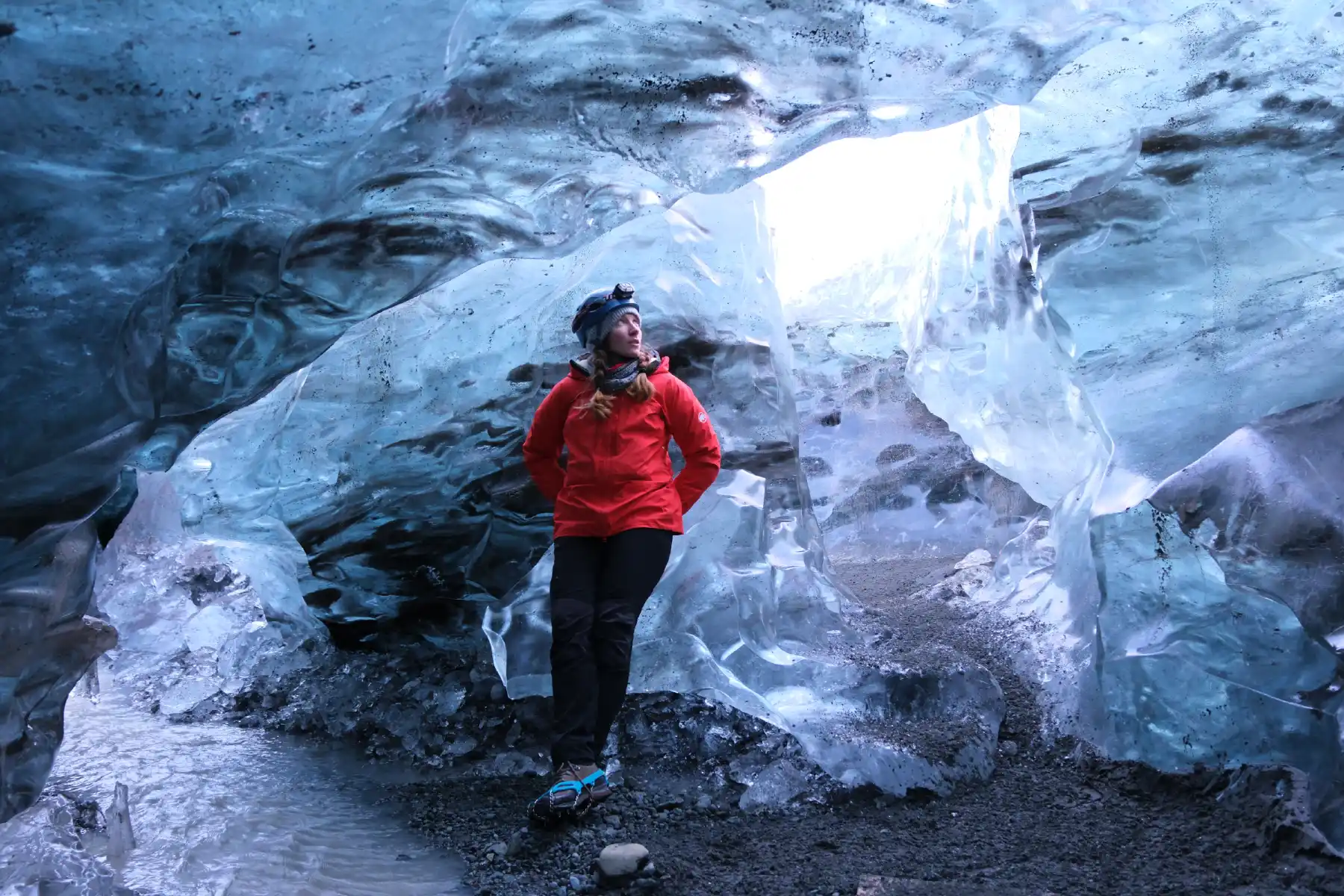
That’s exactly why guided tours are essential. Conditions can shift daily due to weather, temperature, and glacier movement.
If you’re planning to join a crystal ice cave tour in Iceland, this guide covers everything you need to know.
TABLE OF CONTENTS
What are Crystal Ice Caves?
Crystal ice caves are naturally formed caves inside glaciers. They’re known for their clear, blue, glass-like ice walls and ceilings. The word “crystal” comes from the ice itself, not actual crystals.
The ice inside these caves is densely compressed. It contains very few air bubbles, around 5% of the mass. Because of this, the ice absorbs red wavelengths of light and reflects blue.
And that’s what creates the cave’s vivid, glowing color.
How Do Crystal Ice Caves Form?
Crystal ice caves form when meltwater rivers flow beneath and on the surface of a glacier. As the water moves, it carves tunnels through the ice. During winter, freezing temperatures stabilize these tunnels and slows down the melting process.
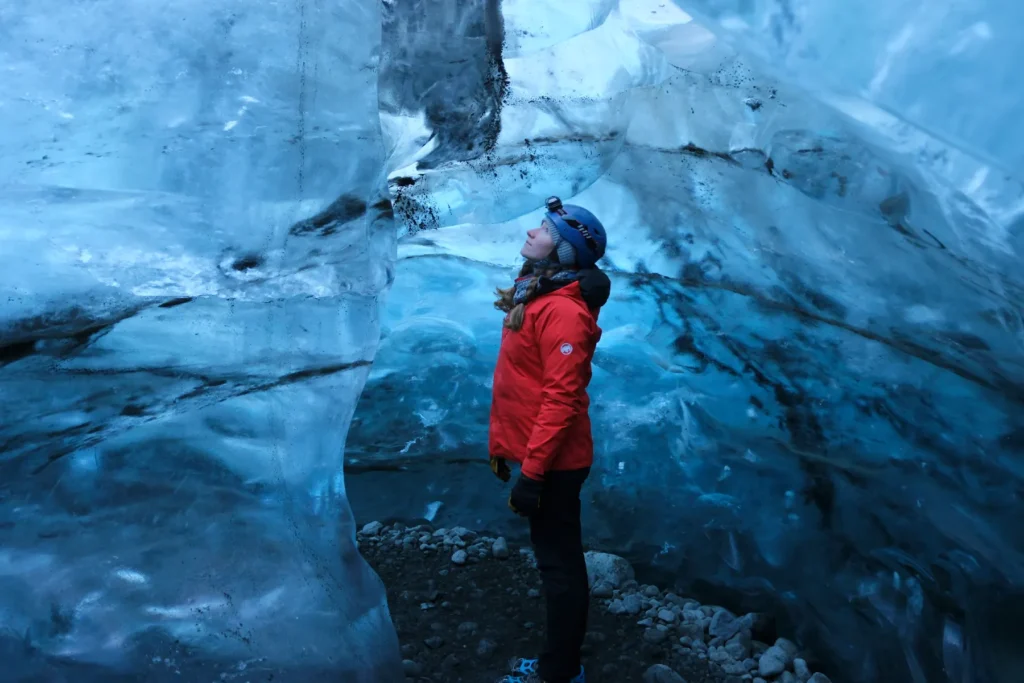
This makes the caves safe to access — but only for a short time. Glaciers are always moving and melting. Because of this, crystal ice caves are temporary phenomenon. Some collapse or disappear completely, while new ones form elsewhere.
Even if you return the following year, you’ll see a completely different cave.
Where Are Crystal Ice Caves in Iceland?
Crystal ice caves in Iceland are found almost entirely in the southeast. This area sits within Vatnajökull National Park. Vatnajökull is Europe’s largest ice cap. It provides the right conditions for large, clear blue caves to form.
The most famous caves are near Jökulsárlón Glacier Lagoon, and very popular spot called Diamond Beach.

Many tours visit caves on outlet glaciers like Breiðamerkurjökull. Others explore caves near Skaftafell.
These locations are popular for two reasons:
- The approach to glaciers is relatively easy
- The quality of ice is excellent
- The tour can be combined with other south coast attractions
How to Get to Crystal Ice Caves?
Jökulsárlón is the most popular destination for crystal ice cave tours in Iceland. It usually serves as the meeting point for most operators.

Here’s its distance from major nearby towns/cities.
- From Reykjavík: Drive east on Route 1 for ~379 km (236 miles), about a 5–6 hour drive without stops.
- From Vík: Around 190 km (119 miles), ~2.5 hours east along the Ring Road.
- From Höfn: About 80 km, ~1 hour west on Route 1.
Here’s the location on Google Maps
In winter, a 2WD car is usually sufficient in good conditions. But a 4WD vehicle is strongly recommended from November to March for better traction in snow, ice, and high winds.
All rental cars are fitted with studded winter tires. But you should always check road.is for road closures and vedur.is for weather before driving.
Icelandic weather can be unpredictable, as we have discussed in detail in our weather guide. If conditions deteriorate, delay your journey.

Tour operators handle the off-road glacier access by super jeep. So your only responsibility is reaching Jökulsárlón safely.
Jökulsárlón Parking
There’s a large gravel parking lot located just off Route 1 along Jökulsárlón road. The parking is open 24 hours a day. Overnight parking is not allowed.
Parking costs 1,000 ISK per car. The fee is valid until midnight on the same day.
You Can Pay
- At on-site kiosks
- Through the Parka app
If you paid for parking at Skaftafell earlier the same day using Parka, you get a 50% discount.

What the Parking Covers?
One payment also covers:
- Diamond Beach
- Eystri-Fellsfjara
- Vestari-Fellsfjara
The parking lot fits cars, campervans, motorcycles, and tour buses. Public restrooms are nearby.
Free Parking Option
There is a small free parking area about 2.3 km away in direction from Reykjavík. From there, it’s a 30-minute walk to the lagoon. This option saves money but adds time.
When to Visit Crystal Ice Caves?
Crystal ice caves are only accessible during winter, usually from October to March, when sub-zero temperatures stabilize the glacier and make cave formations safe to enter.
The best light is just after sunrise and before sunset.
Visits are only possible with certified glacier guides, and for a good reason.

Crystal ice caves are among Iceland’s most dangerous natural environments.
Ice cave can collapse without warning. Sudden temperature changes, rainfall, or glacier movement can make a cave unsafe within hours.

That’s why ice caves can only be visited with certified glacier guides.
As glacier guides working in Iceland, we see how quickly conditions change. A cave that was safe yesterday may be dangerous today.
Glacier guides:
- Assess ice stability in real time
- Monitor weather and meltwater conditions
- Carry safety and rescue equipment
- Choose routes that avoid weak ice and hidden crevasses
- Cancel tours entirely if conditions are unsafe
This real-time decision-making is what keeps visitors safe.
Our Ice Cave Tour Experience
We’ve joined crystal ice cave tours twice.
Our first visit was back in 2024, and second was in 2025. Both tours felt completely different.

In 2024, the cave was on the east side of Breiðamerkurjökull. In 2025, it had moved to the west side.
The ice looked different. The colors changed. Even the surrounding landscape felt new. This is why repeat visits can be worth it. No two ice caves are ever the same.
Who Ran the Tour
We booked through Arctic Adventures, which is a well-known tour company. But the actual tour was run by a smaller local operator, Glacier Mice.
From start to finish, everything was well organized. Emails before the tour were clear, instructions were easy to follow, and the pickup time was exact.

We rode in a super jeep that could fit up to 14 passengers, and our group matched that size. The ride was comfortable, without feeling crowded.
It was clear from the beginning that this company knew what they were doing. This made the whole experience stress-free and enjoyable.
The Guides
One of our favorite parts of the tour was the guides. Our guide was Icelandic, which made the experience feel more authentic. He was friendly, calm, and very knowledgeable about the glacier and ice cave formations.

Good to add that he spoke fluent English, so everyone could understand the safety instructions and explanations really well.
Not every ice cave tour in Iceland guarantees a local guide. But on this tour, the chances of getting an Icelandic one are relatively high.
The guides also managed the group well and everybody felt safe.
The Drive
The drive to the glacier is part of the adventure. From the Jökulsárlón parking area, the drive takes about 25 minutes.
Most of the route is off-road. Rough tracks, black sand, and small rivers are common.
You could never reach this area in a regular rental car, but the super jeeps handle it easily.

Along the way, the views are stunning. Glaciers, rivers, and volcanic landscapes surround you. Many people start taking photos before reaching the cave.
Crowds & Waiting Time
Ice caves near Jökulsárlón are very popular, especially during peak winter months.
On our 2025 visit, we waited about 20 minutes before entering the cave. Another tour group was inside at the time.
Luckily, the weather was excellent. We used the waiting time to take photos. In winter, Iceland’s golden hour lasts longer, and the low sun makes the glacier glow.

In 2024, we walked straight in with no waiting at all. The experience can vary a lot depending on the day, time, and number of groups.
The best approach is to be prepared and patient.
Dress warmly in layers, bring gloves, a hat, and be patient. Waiting can become part of the experience if the weather is good.
Time Inside the Ice Cave
Most tours allow around 30–40 minutes inside the ice cave.
This is usually enough time to explore the cave, admire the formations, and take photos without feeling rushed.

On quieter days, some tours allow up to an hour inside. During busy periods, time may be shorter to manage crowds safely.
No matter the duration, the experience feels otherworldly.
Safety & Equipment
Safety is taken very seriously on ice cave tours.
Before entering the cave, guides explain the rules. They show which areas are safe and which are not.
We were given:
- Helmets
- Headlamps
- Microspikes

Everything was in good condition, except for one headlamp that didn’t work. It wasn’t a big deal since the cave had enough natural light.
But it shows there’s a little room for improvement in gear checks.
Overall, we felt safe at all times.
Education & Climate Awareness
One area that could have been improved is climate education.
During both tours, there was a little discussion about glacier retreat or climate change. This felt like a missed opportunity.

Climate change explains why ice caves move, shrink, or disappear so quickly. Even a short explanation would make the experience more meaningful.
Costs & Practical Details
There were no hidden costs. The tour price covers everything you need for the experience.
The only extra expense is parking at Jökulsárlón, which is a standard fee for the area. Other than that, everything is included: transport, gear, and the guide.
Overall Experience
Overall, this tour was amazing.
The ice caves were breathtaking—unique, beautiful, and perfect for photography. The local guides made the experience feel authentic, and the logistics were smooth.

We left happy with both visits.
Compared to other ice cave tours in Iceland, this one is great value for money. We would highly recommend it to anyone visiting Jökulsárlón.
Best Crystal Ice Cave Tour Options
When it comes to other options, there’s no shortage of companies offering ice cave exploration around Jökulsárlón and Diamond Beach.
That said, we strongly recommend choosing Vakinn-certified operators wherever possible. Vakinn is Iceland’s official quality and environmental certification.
These companies meet strict standards for safety, professionalism, and sustainability, while actively working to reduce their environmental impact in fragile glacial areas.

Here’s a brief review of four of the best tour operators in the region. The first three are Vakinn-certified, and the fourth follows ethical practices despite not yet being officially certified.
| Tour | Duration | Group Size | Best For | Highlights | Details & Booking |
|---|---|---|---|---|---|
|
Glacier Mice |
3–4 hrs |
12–14 |
Adventure & Photography |
Changing caves, super jeep ride |
|
|
Glacier Guides |
2.5–3 hrs |
8–12 |
Families & Learners |
Education, glacier knowledge |
|
|
Glacier Adventure |
3–4 hrs |
10–15 |
Adventure Seekers |
Off-road thrill, glacier trekking |
|
|
Local Guide Iceland |
2.5–3 hrs |
10–12 |
Slow-paced & Cultural |
Storytelling, small groups |
We personally took our tour with the first operator. Our experience with them was excellent in terms of guiding quality, safety focus, and responsible travel ethos.
1. Arctic Adventures / Glacier Mice
- Duration: 3–4 hours
- Difficulty: Easy–Moderate
- Group Size: 12–14
- What’s Included: Super jeep transfer, safety gear (helmet, microspikes), guided cave exploration
Experience Details:
- Super jeep ride across uneven terrain
- Guides allow ample time for photography and observation, creating a relaxed experience
Pros:
- Experienced local guides
- Adventure + photography combined
- Well-organized and safety-focused
Cons:
- Limited glacier science commentary
- Occasional waiting times during peak season
Best For: First-time visitors, photographers, adventure seekers
Ratings:
- Adventure: ⭐⭐⭐⭐
- Photography: ⭐⭐⭐⭐⭐
- Education: ⭐⭐⭐
- Family-Friendly: ⭐⭐⭐⭐
2. Glacier Guides
- Duration: 2.5–3 hours
- Difficulty: Easy
- Group Size: 8–12
- What’s Included: Guided hike, safety gear, photography tips, educational commentary
Experience Details:
- Cave exploration is calm and structured, with sufficient breaks for observation
- Guides emphasize educational aspects, explaining glacier formation, ice age history, glacial ecology, and environmental impact
- Guides also share stories about the region, including local folklore
- Off-road adventure is minimal, making it safe and relaxed for families and beginners
Pros:
- Highly educational
- Small groups allow personalized attention
- Safe for children and less physically demanding
- Slow pacing allows more photography opportunities despite less adventure
Cons:
- Shorter cave exploration time
- Less adventurous
Best For: Families, learners, and travelers who want to understand the science behind the ice
Ratings:
Adventure: ⭐⭐⭐
Photography: ⭐⭐⭐
Education: ⭐⭐⭐⭐
Family-Friendly: ⭐⭐⭐⭐
3. Glacier Adventure
- Duration: 3–4 hours
- Difficulty: Moderate
- Group Size: 10–15
- What’s Included: Super jeep ride, glacier trekking, cave exploration, safety gear
Experience Details:
- Glacier trekking included; physically challenging, not ideal for small children
- Cave exploration is brief, but the off-road journey is thrilling
- Photography opportunities exist but require quick adjustments due to pace
- Highlights include crossing ice bridges, navigating frozen streams, and seeing unique ice textures formed by winter freeze-thaw cycles
Pros:
- Rugged, authentic glacier adventure
- Glacier trekking included
- Good for physically active travelers
Cons:
- Less focus on education
- Shorter cave visit
- Not suitable for families with young children
Best For: Adventure enthusiasts, thrill-seekers
Ratings:
Adventure: ⭐⭐⭐⭐⭐
Photography: ⭐⭐⭐
Education: ⭐⭐⭐
Family-Friendly: ⭐⭐
4. Local Guide Iceland
- Duration: 2.5–3 hours
- Difficulty: Easy
- Group Size: 10–12
- What’s Included: Guided hike, storytelling, small group experience
Experience Details:
- Cave exploration focuses on enjoyment and storytelling
- Guides share local legends and glacier narratives, making it a culturally rich experience
- Off-road adventure is minimal; perfect for travelers who prefer relaxed tours
- Photography opportunities exist but are less dynamic
- Highlights include hearing stories about glacier myths, observing hidden ice textures, and enjoying quiet moments in the cave
Pros:
- Cultural insight and storytelling
- Small, relaxed groups
- Safe and accessible
- Slow-paced tours
Cons:
- Limited adventure
- Shorter cave visit
Best For: Travelers seeking cultural experience and storytelling
Ratings:
Adventure: ⭐⭐⭐
Photography: ⭐⭐⭐
Education: ⭐⭐⭐
Family-Friendly: ⭐⭐⭐⭐
Practical Tips
Check weather conditions in advance, tours may reschedule due to snow, ice, or wind. Also, caves can get flooded after rain.
Use the bathroom before the tour, as there are no facilities at the glacier.
The tours don’t include food. If you want to have snacks, make sure to bring some.
Visit early morning or late afternoon for best light conditions and fewer crowds.
Bring a tripod for photography inside the cave to capture long exposures in low light.
Always follow guide instructions for safety and stick to the marked path.
Dress in warm layers and get waterproof. Cave explorations sometimes requires moving through narrow spaces that can be wet and muddy.
Check weather conditions in advance, tours may reschedule due to snow, ice, or wind. Also, caves can get flooded after rain.
Use the bathroom before the tour, as there are no facilities at the glacier.
The tours don’t include food. If you want to have snacks, make sure to bring some.
Visit early morning or late afternoon for best light conditions and fewer crowds.
Bring a tripod for photography inside the cave to capture long exposures in low light.
Always follow guide instructions for safety and stick to the marked path.
Dress in warm layers and get waterproof. Cave explorations sometimes requires moving through narrow spaces that can be wet and muddy.
For more packing tips, you can check our detailed packing guide.
Interesting Facts
- Ice caves are living structures, evolving with meltwater and pressure.
- Caves can disappear within weeks. This makes each visit unique. Also, climate change shortens cave lifespan, so some caves may be inaccessible months later.
- Color comes from compressed ice filtering light. Darker blue indicates older, denser ice.
- The cave environment is silent except for dripping or sometimes running water. This creates a surreal experience.
Summary
Crystal ice caves are naturally formed features inside glaciers. They’re famous for their clear, blue, glass-like ice created by densely compressed glacier ice.
In Iceland, the best crystal ice caves are found in the southeast near Vatnajökull National Park, especially around Jökulsárlón, Breiðamerkurjökull, and Skaftafell.
These ice caves form when meltwater rivers carve tunnels through the glaciers, and then stabilize during freezing winter temperatures. Because glaciers constantly move and melt, ice caves are temporary and change every year, making every visit unique.
Ola and I have visited caves in Jökulsárlón two times, in 2024 and 2025. And our experience differed completely each time, with caves forming on different sides of the same glacier and showing new shapes, colors, and surroundings.
The ice caves can only be visited safely from October-to March and always with certified glacier guides. If you plan on joining an ice cave tour in Iceland, we’ll highly recommend you opt for a Vakinn-certified operator.
We hope we’re able to address all your questions, if not, please feel free to ask in comment section below!
Facebook
Pinterest
LinkedIn
Twitter
Tour Rating
Sustainability Radar
0%
FAQ
Are crystal ice caves safe to visit?
Yes, but only when visited with certified glacier guides. Conditions inside ice caves can change rapidly due to temperature, rainfall, and glacier movement.
Why do crystal ice caves look blue?
The blue color comes from densely compressed glacier ice with very few air bubbles. This ice absorbs red wavelengths of light and reflects blue, creating the cave’s vivid, crystal-like glow.
How long do you spend inside a crystal ice cave?
Most tours allow around 30–40 minutes inside the cave. On quieter days, this can extend up to an hour, while busy days may be slightly shorter due to crowd management.
Do crystal ice caves stay the same every year?
No. Ice caves are temporary and change every season. Some collapse or melt completely, while new ones form elsewhere on the glacier. Even returning the next year means seeing a completely different cave.
Where are the best crystal ice caves in Iceland?
The best caves are near Jökulsárlón Glacier Lagoon, formed in outlet glaciers like Breiðamerkurjökull and glaciers near Skaftafell, all within Vatnajökull National Park.
Can children visit crystal ice caves?
Yes, but age limits depend on the operator. Many tours allow children from 8–10 years old, provided conditions are stable. Family-friendly operators typically offer slower-paced tours with minimal off-road travel.
What happens if my tour is canceled due to weather?
Cancellations can happen due to wind, rain, flooding, or unstable ice. Reputable operators usually offer a reschedule or full refund.
Do I need photography experience to enjoy an ice cave tour?
While photographers love ice caves, the experience is equally rewarding for non-photographers. Guides help point out formations, textures, and light patterns that make the caves visually stunning.
Are ice caves affected by climate change?
Yes. Warmer temperatures and increased rainfall shorten the lifespan of ice caves and make them less predictable. Climate change is one reason caves move, collapse, or disappear faster each year.
When is the best season for ice cave tours in Iceland?
Ice cave tours in Iceland usually run from mid-November through March, when freezing temperatures make the caves stable enough to enter.
Is safety gear provided?
Yes, tour operators provide all essential safety equipment, including helmets and microspikes. Moreover, tours are always led by trained glacier guides who assess conditions in real time.
Can I book ice cave tours in advance online?
Yes. All major operators offer online booking, and reserving in advance is strongly recommended, especially from December to February.
Is it better to visit in the morning or afternoon?
Early morning and late afternoon are often best. These times usually offer softer light, fewer crowds, and better photographic conditions, especially during winter’s extended golden hours.
> YOU MAY ALSO LIKE

Langjokull Ice Cave – Ultimate Review of a Man-Made Glacier Tunnel
31 May 2026
No Comments

Falljökull Ice Cave & Glacier Hike Tour – Our Honest Review
26 February 2026
No Comments
TABLE OF CONTENTS